Does Innovation Cost A Lot?

cost of innovation

How much is a lot? A million dollars may be a lot to some and small change to others.

If you are intending to spend on Innovation then it also depends on exactly what you are buying.

The word Innovation covers a multitude of activities but at the very basic level, you can create new ideas for products or services for very little cost.

As a rule of thumb, I have noticed whilst conducting idea generation workshops that in order to obtain an idea worth considering further we need to generate at least 10 ‘off the wall ideas’. Furthermore, to get a single idea worth investigating or developing we need at least 10 of these ideas.

So the ‘golden ratio’ is approximately 100 to 1. If you know how many ideas you need then this will give you a handle on the amount of time you must set aside. How you do this in an organisation is up to you.

Ideas are only just the start. What sort of system do you have for capturing ideas? You need to capture as much information as possible for future recall. Does this system work for ideas that come ‘out of the blue’?

Everything you do must be evaluated in some way so who judges? Is it the boss, a group of experts, a focus group or perhaps naive bystanders? Children are naturally good at this, if they don’t ‘get it’ you will know immediately.

Is that it? Well no. You need methods of trying things out (playing or prototyping) and capturing learning. Hopefully everything goes well but there are some failures (do you remember Coca Cola Black?).

There is no more is there? Well yes. If you are going to manufacture something as a result of your innovation activity then this may involve some extra costs also which you may wish to factor into your overall innovation cost or recover from sales. If you have never followed the path of innovation before then you may spend money on organisational culture and behaviour.

Also please stay away from the Black Hole of Innovation. It can become a drain rather than a return on investment. Read more about Black Holes. Do not be put off though, the gains can far exceed the costs.


Let’s see about fine tuning your innovation efforts

Hackathons Do Not Grow Radishes

hackathons do not grow radishes

Hackathons! I bet you have noticed posts about them or maybe even been to a few.

They can be fun, they can even help young entrepreneurs get a feel for getting into the world of business.

Some produce good ideas, but fundamentally they are rubbish.

So why do I think they are bad? It will most certainly not be everyone’s opinion but here is mine. I’d like to hear yours too so please get in touch with your comments.

Are there pros and cons? Yes of course and here are the main points you will discover after doing a little research:

For:

Students and employees can experiment with or learn skills that they would not be able to do in a classroom or lecture room. They are easy to organise and most people know (vaguely) what they are.

Against:

If held within an organisation they can be a distraction from the real issues facing it. They tend to be formulaic and not representative of real world situations. Goals can be unrealistic and the whole situation stressful. They also develop a herd mentality (not quite groupthink). Also, research shows that the output of very few hackathons ever sees the light of day.

So what is the answer? Well first of all we should address real problems, I find it useful when assessing the innovation potential of a business to highlight one or two problem areas that are suitable for problem solving amongst the workforce. Assuming that management provides support, employees become engaged and the results usually work out.

Many businesses simply recognise the existence of ideas and give their employees the time and resources to develop them. Almost anything is possible!

High value is created when you solve a problem. Maybe you solve a business problem in which case a business (or businesses) might pay you some money. But there are other problems such as availability of medicines, food, clean water, decent housing etc.

So if you are a school, college or community group then why not take one of the above?

You might say that the answer to these already exists, grow more, make more etc but innovation needs to happen. Things can be produced locally (but maybe in a different way) or perhaps the supply chain requires a change.

However, you look at it there are problems to be solved – everywhere, and wherever you solve a problem value will always be created.

As one of my network commented the other day ‘hackathons do not grow radishes’.

Let’s talk about setting up a challenge for you …

Chaos And Planning

Chaos And Planning

July 1, 2022 ·

Podcast: Chaos And Planning

2 Min, 50 Sec · By Derek Cheshire

Some believe that you cannot plan creative activities. Simon Raybould and I take the wonderful topics of chaos and planning and weave them into a conversation. Obviously there's a bit more to it than that, but to get the whole story you will need to listen in.

Click to subscribe: Apple Podcasts | YouTube Podcasts | Spotify | RSS

Do You Use Bad Language At Work?

An example of using innovation language

No, I am not referring to swearing or uttering profanities. Do you use language at work that is not appropriate in a way that is not understood by other people? This is language that is bad for communication, bad for understanding and ultimately bad for organisational culture and of course your profitability.

In a world where people of different cultures might come together and where people from different disciplines might need to collaborate it is perfectly possible that our colleagues might at best, misinterpret what we are saying, and at worst might not have a clue.

It is often said that communication has two parts, a message and a meaning. The message might be written in a common language such as English but the meaning could vary.

Let’s take the example of a group of people that have been recruited to form an Innovation function. Previously they have worked in engineering, research, operations, sales, marketing, finance and logistics. You want them to gel as a team and then create ideas for a new product or service and then deliver it.

But, they all start arguing when it comes to the basics. There seem to be many different ideas about the deliverables that you want from them. What exactly is a strategy, a plan, even a team? It may sound trivial but avoiding such mismatches of expectation and delivery can avoid a lot of heartache.

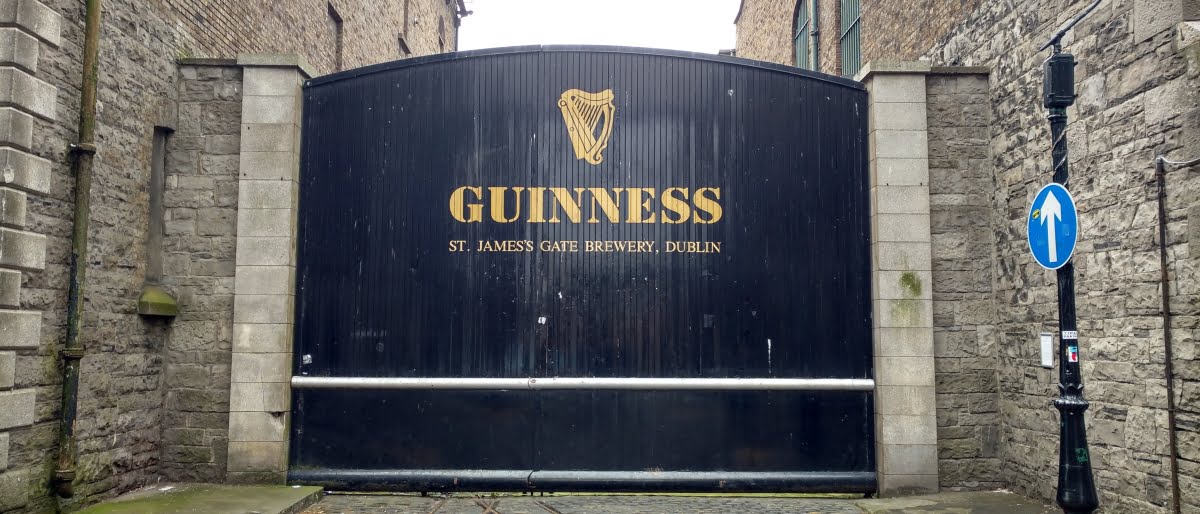
Many years ago I had the pleasure of listening to Ralph Ardill from the Brand Experience consultancy about a project that turned an empty brewery into a major tourist attraction for Guinness (The Guinness Storehouse in Dublin). He had to define a language for the project team that he brought together. We’ll never know if it would have worked if he had not, but the result is stunning. Follow the link above to see for yourself.

Marketers have long understood the power of language. They talk of brand strategies and have manuals that describe image and tone of voice. Historically these have been used to communicate with customers and then more recently internally so that this affects the culture within the business.

This is all good but language has not really been considered in a technical or engineering context other than simply to define a technical term (length, width, height, density etc).

The big question is, how far do you take it? Does the placement of desks and other office furniture just contribute to ergonomics or because it affects us as human beings, is it part of the ‘language of the office’?

At this point I say it does not really matter, and apart from being interested, what happens in individual businesses is of no concern to me (sounds harsh I know). But what I hope I have highlighted is that there is a long list of things that could be considered as part of the everyday ‘language’ of your business and that you should think about what you use and what aspects are covered.

So, please take a look at the Guiness Storehouse website and remember to avoid ‘bad’ language if possible.

More about Innovation language…