SMART goals are rubbish but massive goals are better

Massive goals

You may hear a lot of talk about SMART goals and then see lots of discussions (and possibly argument) afterward. The topic really gets under people’s skin.

First of all, let me admit that goal setting is NOT my specific area of expertise but I have taught it as part of Leadership and Management courses and I have come across many people who have struggled with the concept. I, therefore, have a reasonably logical argument as to why SMART goals are rubbish.

I can hear the howls now, but SMART goals are not possible. Remember what SMART stands for? T is the problem here. Goals cannot be associated with a moment in time. The issue is that we confuse goals with objectives. Objectives can be SMART but the question is, are SMART objectives good?

They may very well work for some people but what about the others? If you think in a linear fashion (I don’t and many creative people don’t either) then compartmentalising things and sticking labels on them just does not work. The concept does not work and neither do most of the recognised ways of writing them down (to do lists, Gantt charts, network diagrams, etc).

If you work like this then you might try creating a story and a storyboard. Think of it a bit like a train or a bus journey with timetabled stops at certain places (although the journey may meander a little).

This is all very well, I hear you say but where is this compelling reason to not use SMART as a way of getting things done. Well the real reason lies in human nature. We like to achieve things so many of us do not actually set objectives that stretch us. We set objectives that we can easily achieve. We can then reward ourselves and spend time telling everyone how much stuff we have to do when in fact we have set objectives which are far too easy.

Ease of achievement is also the main reason why many schools no longer teach children about SMART goals (or should I say objectives?). So, what is the latest thinking? How do we move forward?

The answer lies in massive goals. These really are massive not just big!

Imagine being told by Pharaoh that you had to build the Great Pyramid of Giza (image helpfully supplied above). You would not just go to B&Q and get a few bags of quick-drying cement or have a lorryload of bricks delivered by a builders merchant.

No, this would require considerable thought, considerable stretch, and motivation (although the threat of death might do that too).

Why all this Pyramid talk? Well, this is the key to attaining those massive goals.

Forget a moment about the hidden chambers and other wonders, let us focus on this enormous structure. How on earth could we build it? Think about how we might draw a pyramid.

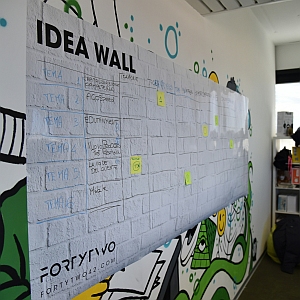
There is the triangle that forms the outline and then rows of slab-like shapes that make up the inside.

Let me suggest that your massive goal, whatever it is, sits right at the top of this pyramid. Immediately below that are the last things that must be in place before you attain your goals. And the row below that contains the things that must be in place before these …… and so on.

So, we start from the bottom. These stones are objectives. Make them SMART if you want but please don’t make them too easy. Tick them off as you go and when you get to the top you should have achieved something really massive.

This works at many levels. For instance, we are building, working from the bottom up, have a funnel (of sorts) and we can focus only on the things that help us achieve our goal.

And finally, it makes a great picture on a whiteboard or flip chart that we can tick off of colour in.


 

3 Innovation Tips To Ensure Failure

Innovation tips. Innovation success

3 innovation tips to ensure failure? No, not really. As you might have guessed, I do not really want to see your Innovation efforts fail!

I am not saying that if you accept all of my advice you will succeed either. Ignore all of these and I can almost guarantee failure in the near future.

Avoid Groupthink

Groupthink is probably the biggest killer of Innovation. It occurs when a group of people collectively decide to simply follow what the group thinks. Usually, this is done with no communication at all.

This often happens when there are very few contributors with nobody willing to challenge them. There may very well be ideas that do not get put forward and those that do are not thoroughly evaluated.

Try This:

Get someone to play the role of ‘Devil’s Advocate’. This person’s job is simply to question and challenge the ideas provided. Hopefully, such challenges will be made in a non-repetitive manner (i.e. not asking the same questions or waiting until the same point in time) which will force critical thinking within the group.

Ensure There are Sufficient Resources

Sometimes, it’s not the lack of ideas that stops us – it can be a lack of resources. It is true that rationing resources can lead to enhanced creativity but if you go too far you will find that your Innovation output will decrease. It also makes it exceedingly unlikely that you will actually manage to implement anything concrete.

Try This:

You need Innovation champions who are able to lobby the right (high level) people for money, manpower, and materials. You will need your ‘Innovation Manifesto’ to ensure that people know the importance of Innovation with regard to competitive advantage and sustainability (and of course your bank balance).

Without adequate resources, any money you spend will simply be a cost, not an investment!

Believe In Your Ideas

Even organisations that come with hundreds of ideas can stumble along the wayside. Assuming that you get a heap of ideas you must DO something with them. From the point that ideas are generated, there are many barriers that lie in wait.

Ideas may not be evaluated because they do not come from ‘the right people’, or you tried something similar last year or there is an arbitrary decision made about resources required (we don’t have the money, it’s too hard, etc).

Try This:

You must have a process in place for ensuring that action is taken. And you must also ensure that whatever you decide to do with an idea, you ensure that the originator knows what has happened to it and why. If you do not at least do this, then your sources will dry up quickly. Have you ever wondered why the typical company suggestion box does not work?

These are just the tip of the iceberg, something to get you going. If you are serious about your Innovation projects then I’d like to talk to you to see how I can help ensure your projects succeed.

The Order Of Chaos – Dealing With Complexity

chaos amd complexity

Chaos, disorder, entropy – it always seems to increase. To try and make sense of this fact, organisations put in place more and more elaborate structures. We simply cannot tolerate chaos, either as individuals or as organisations.

We grow up listening to the mantra ‘You can only manage what you can measure’, or at least manage what you can grasp hold of or touch! Our endless creation of structures, procedures, and hierarchies has been a fruitless task, like repairing earthquake damage with sticky tape.

As many scientists know, entropy always increases, we can do nothing to stop it, and I do not propose that we try. Here I talk about chaos, which is what we feel and observe and which causes physical reactions such as stress. This we can do something about.

Is chaos simply a matter of perspective, a product of where we make our observations from, and how far away we are?

If you sit inside an atom and watch electrons whizzing around your head like flies around a picnic, you might think this is chaos. Step up a level and our atom now seems to have some order.

We see electrons moving around the nucleus of the atom, rather like planets orbiting around the Sun.

Step up again and you might see molecules or even real objects such as chairs or tables. It’s all about perspective. We can now see patterns, there is no random motion, BUT we do appear to have lost some detail.

Changing perspective is the backbone of creative or alternative thinking. Think of a time when you were reading house particulars. One family member sees a games room with bar, another sees a well-equipped kitchen whilst some simply see comfortable bedrooms and tranquil bathrooms. Everyone is, however, looking at the same thing but from a different perspective.

By shifting perspective we can bring order to chaos, but is this what we need (or want). I shall examine this further in upcoming posts. Stay tuned!


Do you have a social space at your place of work?

social space creative space

How many people have a ‘real’ social space at their place of work? By this I mean a space where people can gather, chat, sleep, chill, etc not a space like a canteen (where people can socialise) which has its function dictated to it.

You might ask why a company needs a space like this. Well, let me tell you a short story instead.

At a small company I worked at, we moved into some temporary offices where we had very little extra space. There was one reasonably sized room spare. We had a heated debate over what we should do with it.

There were suggestions like coffee room etc. However, I managed to persuade the boss to let us have a creative space.

We bought a couple of brightly coloured sofas, a bubble tube, a large jenga set, some 3D puzzles, a whole load of posters and some other small items.

The only rule regarding the use of this space was that no phones were allowed. That was it.

So what happened? Well if you wandered along during the day you might find someone asleep, reading a technical paper, eating a sandwich or having an impromptu meeting.

Our newly created space was also where visitors entered the building. It quickly became known as the coolest reception area around.

So was this a good idea? Yes, it was. We had a space which was multifunctional, enhanced the creativity of employees and which contributed greatly to the (organic) organisational culture of our company. It was also very cheap (around £1200 if I remember rightly).

Your space need not be like ours, or indeed like the one shown in the photo. It can, however, at very little cost, contribute greatly to the culture of your organisation.

Why not create a garden, scatter cushions near the watercooler or even create a reconfigurable space that can change with the day of the week or even the seasons. The choice is yours.

Creativity On A Budget – Get Yourself A Cheap Whiteboard!

Creativity on a budget

This article came about as part of a project to create some ideas around ‘Creativity On A Budget’. I thought about a) keeping things simple (one of the major requisites for both Creative Thinking and Innovation) and b) keeping things relatively low cost.

Top of my list was a whiteboard. These can be useful for a number of things including capturing ideas when they leap into your head, logging issues and problems and for people to contribute to solving such issues. In fact, you can use a whiteboard for just about anything. The main thing that guarantees effectiveness is its location.

First of all, let’s talk about cost. You can buy a cheap one but it is likely to be small. But what is a whiteboard? It is just a shiny white non-porous white surface so you could use any white gloss painted surface. So you could make your own from a large offcut of wood or (as I did) use one side of a white door. You can even paint part of a wall if you feel so inclined. If you have a home office you might find your spouse or partner complaining about this. Please use the right side of the door.

So where should your whiteboard be located? I am assuming that you have the luxury of choosing a location where everybody in your business, office or team has access. No one person should be seen to be the guardian of this precious resource.

You might be suspicious of staff or colleagues but they have to be trusted at some point. Locate the whiteboard where it can be accessed by the maximum number of people. This could be near the watercooler or coffee machine in a small office e.g. a solicitor or financial adviser. For larger offices, use your common sense (or imagination).

The only major things that you must do are to give people an idea of why this whiteboard has appeared and what it might be used for. It is also important to acknowledge all contributions and suggestions.

Happy whiteboarding!