Make Sure Your Different Is Different

how different is your different

March was BC (before coronavirus) and we are now in the era AD (after disease). The virus is not totally gone but businesses and other organisations are already trying to determine how to move forward. Some will try to carry on as before and will either a) fail or b) evolve slowly. Others will realise that the world will be different and will, therefore, try to be different.

The problem with this way of thinking is that everyone else is trying to be different too. You must ensure that your ‘Different’ is not the same as everyone else’s ‘Different’. How?

First of all, let me introduce you to precept number two of my twelve precepts of Creativity. It simply states ‘Explore the givens’. When we are trying to work out what to do, we usually do not go back to basics every time. There are some things that we just assume will be constant.

For example, we might have priced up a project last year and decided it was too expensive because of the IT costs. This year, even though costs might have fallen we have not revisited a potentially beneficial project because we have made assumptions about IT costs.

This is a trivial example but we can encounter hundreds of these in a week in our workplace.  We might do things in a certain way because the Health and Safety manual says so. In fact, the manual might say what has to be done rather than how!

There are other ‘rules’ such as how a document should look or what format a proposal should be in. There are ‘givens’ everywhere and sometimes challenging these might give us the edge we are looking for.

I also teach people a couple of techniques that relate to the boundaries of problem issues. We ask the questions ‘what if’ regarding the boundaries and this allows us to unpick the problem and make it look different (and solvable).

So far, I have made it sound like we just do not conform. Well yes and no. Let us consider an actual example.

I am currently revising my book Creativity In Action and targeting at larger companies not small businesses. It goes without saying that some of the content will be different but that is not what sells books. Books are sold on looks. A book has to grab your attention when you walk up to the Business Books section of your local book store.

If you search for information on what makes a good book cover you will find a lot! The results will include the following:

  • Must include title, author, subtitle
  • Convey the tone of the book
  • Include a hint of the plot or sub plot
  • Include a photo or graphics
  • Choose the right font (how?)
  • Choose the right colour (how?)

And the list goes on. There appears to be a whole heap of collective wisdom about the best way to create a book cover.

My question is do we need it all? The main criterion is the book must say to people ‘you are curious, pick me up’. The book will then sell itself (or not).

On the flip side, everyone who is writing a book that will compete with mine could be using the same criteria. Apart from the unlikely event of coming up with the same title, they could choose a similar, font, colour or just layout.

So, which of the criteria are mandatory? Well in the case of a Business book this is probably not necessary. If someone picks it up, they can look at the foreword or introduction.

How about the author or title? Well, the title might be a good idea but the author is not really necessary either. Other decorations such as graphics or pictures are the type of thing that publishers might try and compete with. We don’t really care, the book just has to stand out.

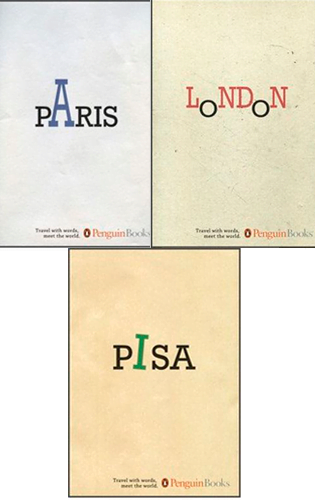
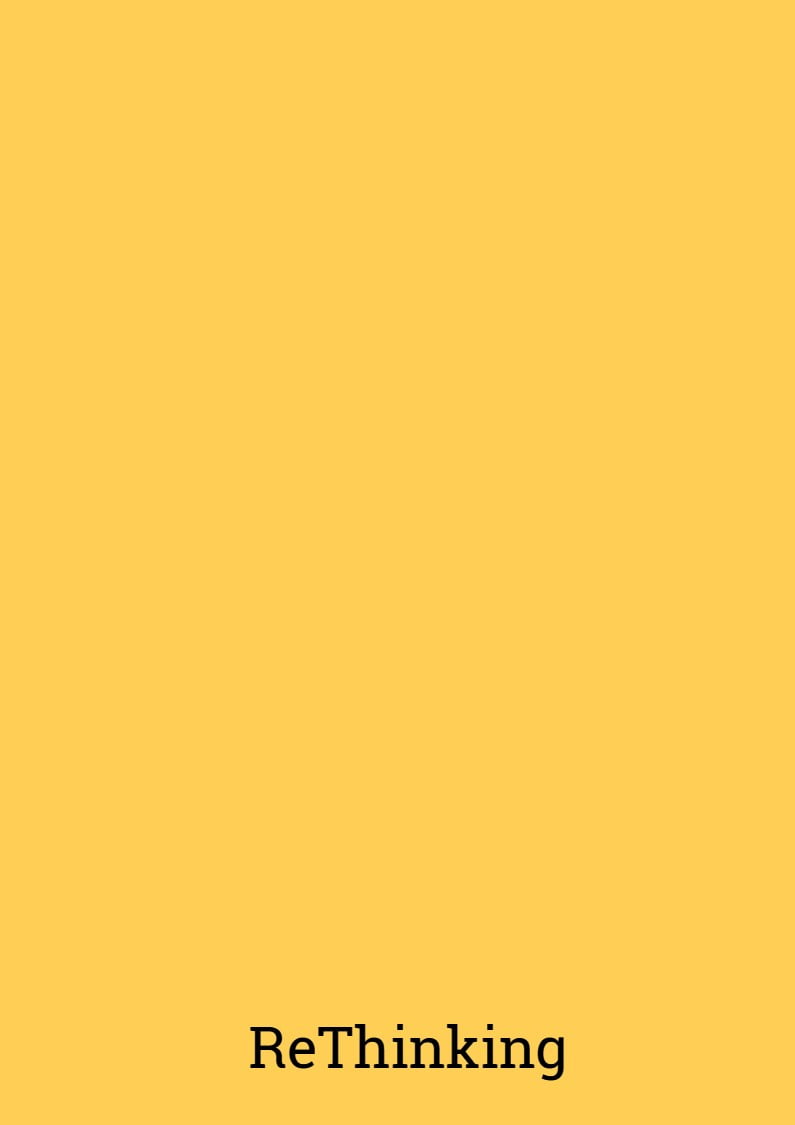
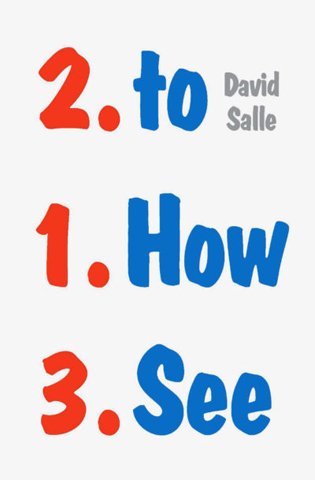
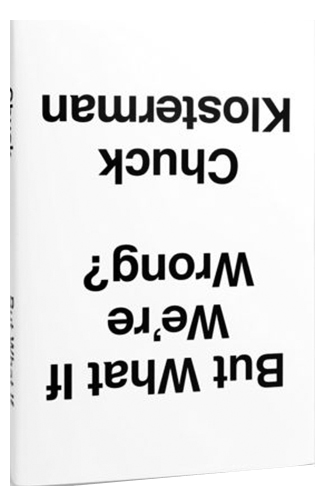
I don’t know what the cover really will look like but I have included some standout book covers below (not business books though) alongside  a mock up of (a possibility for mine). As you can see, I have settled on a bold colour with a small title. Will this stick out? Let’s wait and see.

Whatever happens, I would like you, the reader, to try determine whether the rules that you follow without question, the ‘givens’, really do have to be obeyed or would breaking the rules provide an advantage for you?
Organic Innovation, The Best Way Forward

organic innovation

Organic Innovation is NOT about innovation within agricultural industries although they are not excluded. I am suggesting that Organic Innovation closely follows principles that are derived from agroecology.

At the very centre of this is Diversity. Diversity is important in all aspects of Systems Thinking. In agriculture we mix crops together, employ rotational grazing etc to improve the environment, making it more productive and prevent resources from being exhausted.

Diversified agricultural businesses are more resilient to economic shocks, ensuring survival.

Businesses employing Organic Innovation in the manner that I describe here are employing diverse people with wide-ranging areas of expertise and ways of working. Not only will the workforce be able to withstand economic shocks but if properly managed it will provide new and exciting solutions, giving it competitive advantage.

Co-creation is a bit of a buzzword right now but we will collaborate on a deep and very grand scale. We will be working not just across companies but across the world. There will be globalisation but in a very different way and Design Thinking will be at the heart of everything.

No longer will we consume what large companies make for us, we will demand that large companies make the things that we want and deliver the services that we need. We will also help in creating these.

Synergy will also be key. Anything we do will have to have multiple benefits, not just generate cash for shareholders. Companies will need to have multiple strings to their bow, not just do one thing.

Efficiency is also key although lean Thinking will take a back seat. If organisations are to be able to change within a somewhat ambiguous world then there must be a small amount of excess capacity or else, they will be reliant on external change agents and not be masters of their own destiny.

Just as an ecological business will try to eliminate waste, Organic Innovation will try to ensure that ideas, knowledge, and skills are used efficiently. Where unexpected benefits, products or services are generated then these will be explored, possibly spinning off other organic businesses.

Resilience will be critical in the future so the emphasis will be on using local resources (buildings, talent) and not ‘forcing’ production by importing from elsewhere. Just as farmers collaborate with the sharing of equipment, swapping goods, and attending markets, so businesses will come together. This can happen either through the use of technology such as the internet or by co-locating complementary businesses together (going one step further than the somewhat tired science park concept).

The workforce of the future will depend heavily on human and social values since we are talking about the value that is created as a result of social interactions. The alignment of values will be key both within the workforce and with our customers. There must also be a reflection of what is happening within society as a whole.

Consider a company in the current climate (COVID-19) which soldiers on relentlessly with little concern for the wellbeing of staff or customers. Many companies right now are considering others, but only because they have no choice to do so. Businesses that respond positively are thriving.

Within Organic Innovation, surprisingly we find that tradition has a part to play. Most innovative businesses are relatively new but there does need to be a hint of the past whether it is company history or local culture. This tends to help with a sense of belonging but with room to grow an organisational culture. Start with nothing and you have a very sterile (i.e. both stark and infertile) environment.

Governance will also have a large part to play. Stakeholders will be ethically aware and employees might be keen to have a stake in the business that they work within. It may also be the case that a number of individuals with in-demand skills might have portfolio careers (what we might consider to be zero-hours contracts) and so relationships with these key workers must be maintained.

The parallels between Innovation and Agroecology are strong. Diversity, co-creation, synergy, efficiency, re-purposing, resilience, values, culture, and governance all have key parts to play if we want to be both useful and have staying power in the future.


Thought Leadership – A Way Forward?

thought leadership

The fast pace in the current digital age means that businesses and business models are changing more rapidly than ever. Combine that with the current coronavirus pandemic and the need for rapid change and swift decision making and you have a recipe for ‘excitement’. Thought Leadership is most definitely required.

New technologies and innovations will quickly sweep away well established and seemingly solid business models within just a few months. There are plenty of examples, Blockbusters, and Kodak to name just two.

In the latter case, Kodak failed to adapt to the growth of digital photography and the decline of photographic film, and a company that had traded for more than 100 years was forced to file for bankruptcy.

Blockbuster, which had itself been a disruptive company that saw the growth in home video and DVD during the 1980s, failed to see the decline of video and DVD and the potential for streaming.  It failed to adapt to change and fell by the wayside while players like Netflix dominate the same space today. In a cruel twist of fate, Blockbuster passed on the chance to buy Netflix in its early days.

To further underline the pace of disruption,  just 12% of the Forbes 500 from 1955 still existed in 2015.

So how can businesses remain relevant to their customers in these circumstances? The answer is to do what Blockbuster and others failed to do and adopt innovation in order to survive.

The impetus and thought leadership behind this needs to come from the top.  Senior staff must lead from the front, and encourage their teams to think progressively and kick start innovative thinking within the business.

This isn’t thought leadership as it’s often portrayed: featuring in guest blogs and conferences, but rather actually inspiring people within a business with innovative ideas and practical steps to turn these ideas into reality.

Thought leadership is a powerful way to inspire people both inside and outside of your company. Telling a credible story around a shift in your industry using real-life disruptive examples or builds authority and a consistent view across your organisation – driving innovative thinking and alignment.

The challenge for executives, CEOs, Marketing Directors, Directors of Strategy, etc is to remain up to date with trends in fast-moving industries when they already huge demands on their time, tight budgets, and competing priorities.

This has to be overcome for businesses and their executive teams though, as the ability to remain on top of events and how innovation and technological changes have the potential to affect their markets and clients is increasingly important.

The next stage is how executives can embrace thought leadership within their organisations and find and disseminate key information to help them stay on top of events.

1. Set a goal. Educate others.

Like any initiative, the first question to ask yourself is “why.” Why do you want to be a thought leader? Is it to get promoted, change careers, raise funds or boost brand awareness for the company?

2. Position yourself.

Personal positioning is very similar to corporate positioning. How do you want to describe yourself so that people know what you do? Ask yourself what you’d want to be known for and how you can support that image. This is actually branding as opposed to simply just advertising your position within the organisation.

3. Demonstrate credibility. 

Similar to the corporate or product messaging process, ask yourself the tough questions. What makes you an expert and why should others care? Once you’ve identified your area of expertise and the value that you bring, the next step is to prove your expertise to build credibility.

Use examples and stories to support your claims and highlight your aims.

4. Build a story to humanise your brand. 

Having a personal story will give your company a face and a human touch. People often love personal stories, which allow them to relate to your journey, challenges, and successes versus just hearing about a product and its features or functions. The stories you tell could be about you but they are more likely to relate to other businesses in your market niche. like the Blockbuster and Netflix examples above.

5. Be a resource.

Now that you know how you want to be perceived and have a narrative, think about how you are going to leverage tools to share tips, tricks, and best practices. Perhaps there is new research in your industry. Leverage that and use your know-how to add insight to the report. Always provide insights not just reports. Remember you are a thought leader not a follower.

Boosting Your Creativity

bosting your creativity

There are loads of different ways you can consider boosting your creativity – from small changes you can implement in your daily life to exercises that can help you develop your creative mindset.

Here are 5 very simple things that you can do to start off:

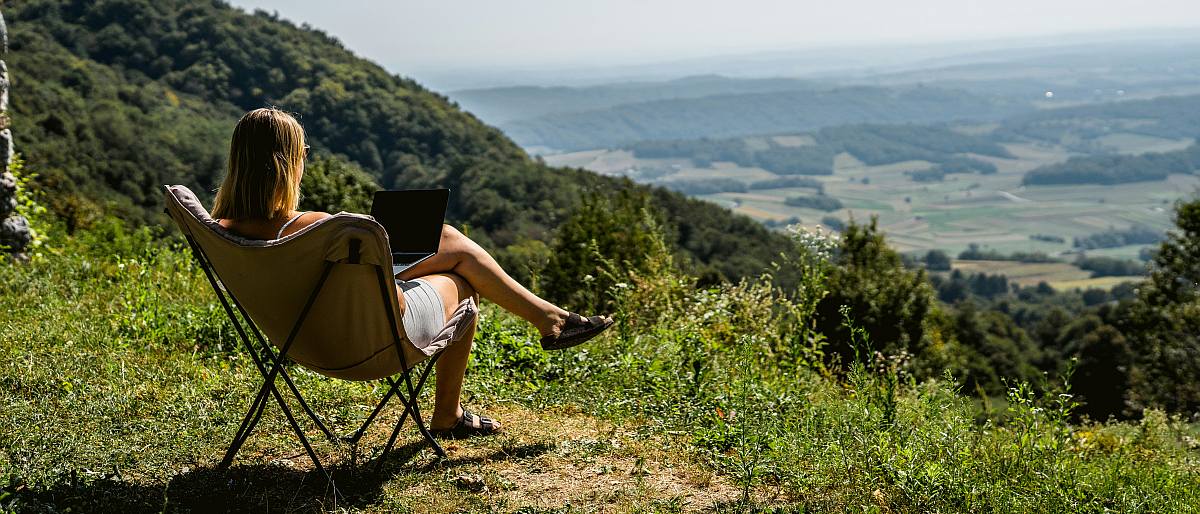
1. Change your workspace. There are many small changes you can implement in your office and daily life, to encourage creativity. Did you know that 60 % of the creative people operate in 2 or 3 different workspaces? Occasionally changing your environment allows your mind to see ideas from a different perspective and even formulate new solutions. Try to change your office workspace, or, if that’s not an option – maybe try working from a local coffee shop, library or even your home office just for a day.

2. Get inspiration from external stimuli. A simple way of encouraging inspiration and creativity is filling your office with various visual stimuli, especially if they aren’t related to your industry – interesting furniture, plants, paintings, photographs, different magazines.

3. Wellbeing and creativity. Our health and wellbeing can significantly influence our creativity. The healthier we feel, the more creative we tend to be. Consider standing desks, sleep-in policies, a corporate gym membership, fruit deliveries, add indoor plants or organise walk-meetings. According to studies, compared to sitting, walking while brainstorming can demonstrate a 60 % increase in the creative output. So, next time you need to come up with new ideas, consider taking a brief walk around the neighbourhood.

4. An office that supports creativity. Many hours are spent in our workplace, so naturally, it has a significant impact on our creative thinking. Even the layout of your office can contribute to everyday creativity. If you can arrange the office in a way that constantly makes people run into each other, it will encourage more interactions and conversations. The more people interact with each other, the bigger the chance for new, creative discoveries. Try and engineer those coffee machine and watercooler moments.

You can also set up different workspaces that support creative thinking: quiet rooms, chill out zones, rooms for large teams, or one on-one-discussions. Of course, not everyone can afford a major revamp of office space – you can start with simply moving the fruit bowl or a coffee maker to a new location or rename the meeting rooms to encourage a different type of thinking.

5. Let ideas brew. Interestingly, researchers discovered that allowing your ideas to “brew” for a while or go through an “incubation period” is important when it comes to our creative success. Even taking a break and stepping away from your project for just 20 minutes can significantly enhance your performance.

No wonder it is said that the best ideas come to us while in a shower. It so happens that the relaxing setting and absolute isolation of a warm shower makes an excellent incubator for new ideas. In fact, any other activities that make us feel good and relaxed, like exercising, taking a walk or cooking,  increase our dopamine flow, and fuel our subconscious “idea generation machine”.

What Comes Next?

What comes next?

We are currently in the throes of what can only be described as a catastrophe, both on a human level and also from a business point of view. It is the latter I am concerned with now, as it seems to be the thing that is most puzzling for us all. What comes next?

First of all, many people seem to think that we are having some sort of blip and then things will go back to being as they were. Well, this is definitely wrong. We have a virus that is killing people and for which there is no known cure.

Whether lockdown continues or social distancing stays with us for another year, things will not go back to being as they were towards the end of 2019.

Then we come to that awful phrase ‘new normal’. What is it exactly? The term implies that the old normal was not quite right and that a newer version will be more useful somehow. It also infers that a new state will be constant as though there has just been a change, a slight shift in our day to day lives.

The reality is that the post COVID-19 era will be characterised by change, constantly shifting environments, and also the need for rapid decision making.

So, you are thinking, how on earth do I create plans for my business? Ditch the plans (well the boring linear sort anyway) and create yourself a storyboard. Your endpoint is probably just past the end of the current wave of coronavirus and the intermediate points are wherever you want them to be (significant milestones).

So, at this endpoint, you need to ask yourself a lot of questions about how things will work because we will not know what things look like. Forget the products and services that you currently sell and think about your customers.

Will customers still want the things that you have traditionally provided, will they want something else, will they want more (or less), will they prefer it if you bundle more things together to save them going to many suppliers (a bit like going to local shops or getting supermarket deliveries during lockdown)?

Next, take a look to see if the competitive landscape is changing. Will any of your competitors be weakened or perhaps not be there at all? Will this leave gaps in the marketplace for you to fill?

And finally, you are always going to be able to make money is you have a solution to someone’s problem(s). So, try to think about potential customers who are just popping out of the other side of the pandemic. What extra things might they need, what things might they not be able to do, or what might they be afraid of?

At this point you might be thinking that there are a lot of questions to answer. Things do get harder though. Remember I suggested that our new world will be characterised by change and the need to make decisions quickly. Imagine that your business has to adapt in the same way a chameleon adapts to its surroundings.

You cannot wait to be told what to do, your business must be constantly scanning the environment around it and make decisions accordingly.

In the future, you will need to be nimble. Where you work will be immaterial, especially as technological advances will make remote working seem like we are all together. Factories will still exist but may be staffed by relatively few people.

Organisational structures will change and become flatter and more fluid with greater value placed on knowledge than job title.

For more ideas on structure and infrastructure please also read Soft Infrastructure Post Coronavirus to get a better idea of what comes next.